
LA PLATA LANDSCAPE · SOUTHERN MARYLAND
Plant health care for a landscape that keeps growing well
Healthy plants begin with the right growing conditions. When leaves yellow, shrubs thin out or a bed struggles, the first step is understanding why.
Based in Port Tobacco, La Plata Landscape helps plan care for planting beds, shrubs and trees—from soil and watering concerns to native planting and ongoing garden maintenance.
Discuss Your Plant Health ConcernsCare starts with the cause
The same symptom can have several causes. A brown leaf does not automatically mean an insect problem, and fertilizer is not a universal fix. Review the plant, its surroundings and recent changes before deciding what it needs.
Plant condition & site review
Discuss discoloration, dieback, poor flowering or changes in growth. Photos, planting dates, watering history and recent construction help build a clearer picture.
Assess sunlight, drainage, crowding and visible damage. Some problems need a closer examination or diagnostic testing before a cause can be identified.
Soil testing & improvement
Soil testing helps guide nutrient and pH decisions. Review the results alongside soil structure, compaction and drainage; a fertility test alone does not explain every plant problem.
Plan fertilizer, lime or organic-matter improvements only where they suit the results and planting needs. Learn about soil testing.
Watering & moisture management
Too little water and prolonged saturation can both harm plants. Discuss how water reaches the root zone and how long the area stays wet.
Adjust establishment care to the plant and weather. Where runoff collects, coordinate planting with a drainage plan.
Mulching & planting-bed care
Maintain bed edges, manage competing weeds and refresh mulch as needed. Keep mulch clear of trunks and stems and avoid burying the root flare of trees.
Review planting depth and spacing when a bed struggles. More mulch is not always better.
Pruning & garden renewal
Plan shrub pruning around plant type, condition and the desired result. Remove appropriate dead or damaged growth and consider replacement when a plant repeatedly struggles in its location.
For larger trees, see our Tree Services guide. For new installations, explore Planting & Garden Beds.
Monitoring & problem management
Track symptoms and identify pests before choosing a response. Correcting site conditions, managing weeds and monitoring beneficial insects can be part of the plan.
Discuss any targeted treatment separately after assessment. For invasive vegetation, explore invasive plant control.
Choose native plants for the place they will grow
Native trees, shrubs, grasses and flowering plants can support local food webs and bring seasonal variety to a garden. A layered planting offers more than flowers: foliage, seeds, berries and shelter can serve wildlife at different times of year.
Match the site
Choose for sun, shade, soil moisture, mature size and your region. A moisture-loving native may struggle in a dry bed, while a dry-site plant may decline in a saturated basin.
Use a mix suited to the conditions rather than expecting one plant to solve every problem.
Help plants establish
Prepare the planting area, set plants at the appropriate depth and give roots room. Water during establishment and manage weeds as the planting fills in.
Native gardens still need care. Review seasonal maintenance, plant spread and replacement needs as the garden develops.
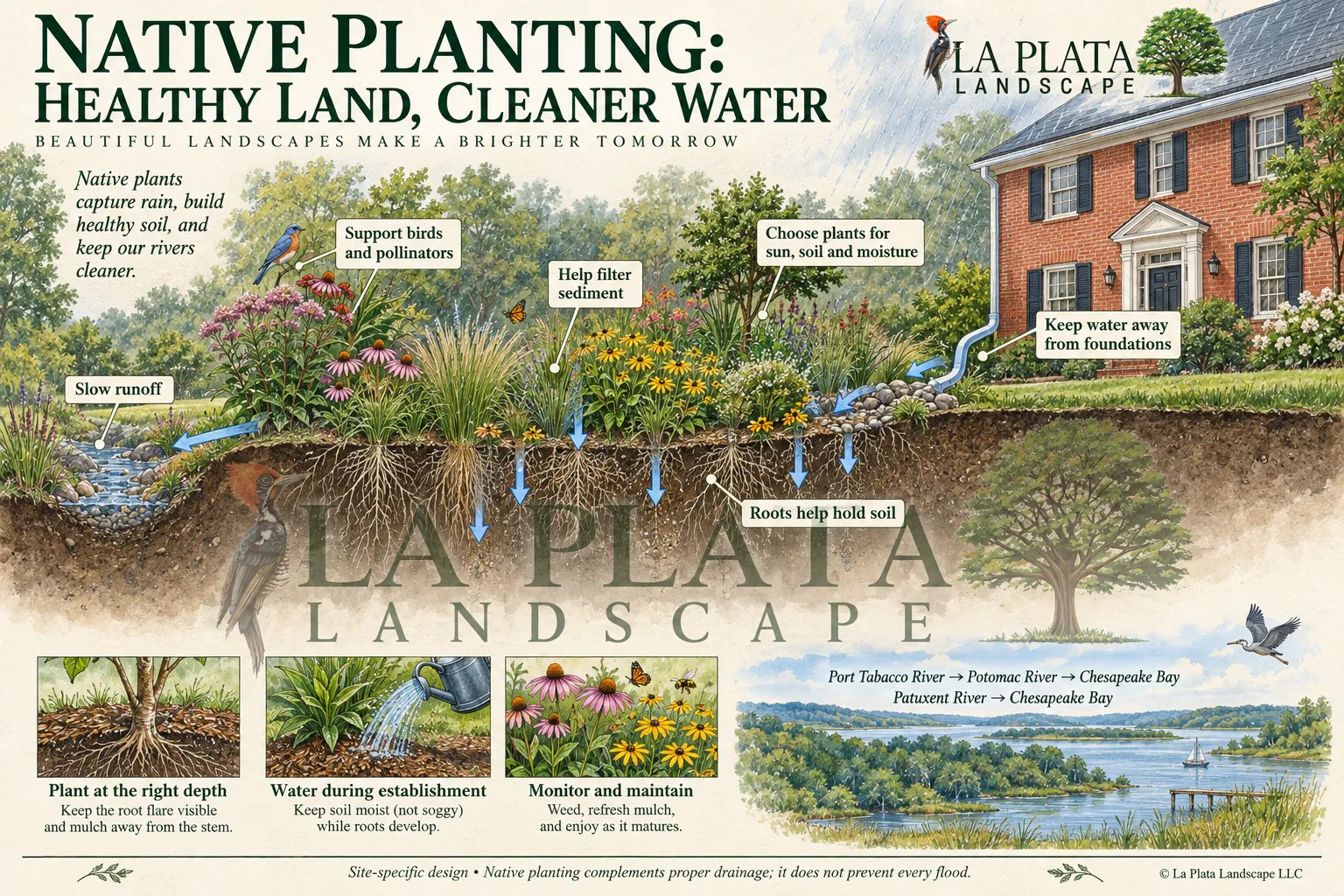
Care for your yard—and the water downstream
Rain running over roofs, pavement and bare ground can carry sediment and excess nutrients into streams. Planting that slows flow and improves soil cover can help reduce what leaves a property.
The Port Tobacco River flows to the Potomac River and then the Chesapeake Bay. The Patuxent River also drains to the Chesapeake Bay. Which river receives runoff from your yard depends on its watershed; our local planting decisions connect to these larger waters.
- Slow and spread runoff: suitably placed planted areas reduce fast, concentrated flow.
- Help hold soil: roots and groundcover help limit erosion and sediment movement.
- Support infiltration: suitable soils and planting can allow more rainfall to soak in.
- Use inputs thoughtfully: avoid unnecessary fertilizer and keep soil, mulch and yard waste out of drains.
A rain garden temporarily collects runoff in a planted depression. Its location, soil, drainage and overflow need to fit the site. See our rain garden and drainage guide.
Protect wildlife, land and the spaces around your home
Support a living landscape
Provide a variety of flowering periods, plant forms and habitat. Observe insects before treating them; many are beneficial or part of the food web.
Balance seasonal cleanup with habitat needs and keep diseased material management specific to the problem.
Plan planting around the house
Allow for mature plant size, access and airflow near buildings. Keep drainage routes open and direct runoff away from foundations.
Vegetation can help protect soil, but planting alone cannot correct every drainage problem or stabilize every slope. Address structural or persistent water problems with a site-specific plan.
A care plan that fits your property
- Tell us what changed. Share photos, your location, the plants affected and how long symptoms have been present.
- Review growing conditions. Consider water, soil, light and maintenance history; arrange further testing where useful.
- Agree on priorities. Define the work, timing and follow-up. Decide what to retain, improve or replace.
- Monitor the response. Revisit the plan as plants establish, seasons change or new symptoms appear.
Learn about our licenses and credentials.
Common questions
Does every struggling plant need fertilizer?
No. Moisture, root damage, planting depth, light and other factors can cause poor growth. Identify the issue and use soil-test information where appropriate before adding nutrients.
Are native plants maintenance-free?
No. They need suitable growing conditions and establishment care. Weeding, watering during dry periods and periodic maintenance may still be needed.
Will a native garden stop flooding?
No garden can guarantee that. Native planting can complement runoff management, but capacity, soils, grading and safe overflow determine how a rain garden performs.
Can you help an existing garden?
Yes. Discuss the plants you want to keep, problem areas and the care you need. Improvements can be made in stages.
Let’s help your landscape thrive
Share what you’re seeing and what you would like to improve. We’ll discuss the next step for your plants and property.
Book a ConsultationFurther reading: Maryland DNR: Forest Conservation Act Technical Manual (PDF) · University of Maryland: Plant Problem Management · Native Planting & Conservation Landscaping · Maryland Sea Grant: Rain Gardens · Chesapeake Bay Program: Runoff · Charles County Watersheds
Government resources
Explore Maryland DNR’s native plant resources and its Native Plants for Wildlife Habitat and Conservation Landscaping guide for Chesapeake Bay watershed planting ideas.
Learn how rain gardens manage runoff through the U.S. EPA rain garden guide. Find local information in Charles County’s watershed assessments.